
Giving a gift: relationships, occasions and practical choices
Choose a gift by asking about the person and occasion. Compare visits, thank-you gifts and festival invitations, then read what named sources support about colours and numbers.
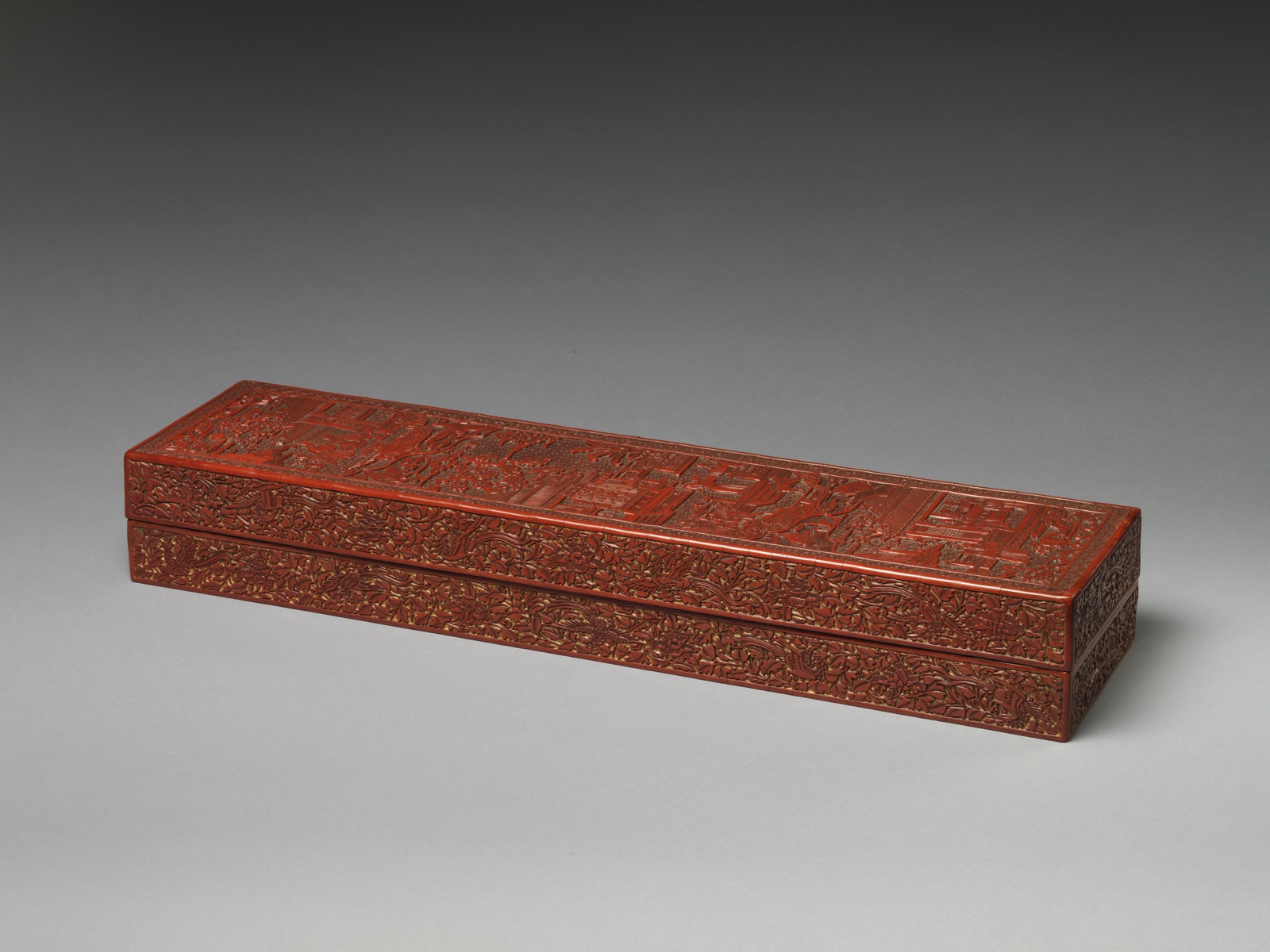
Presentation box, China, first half of the 17th century. The Metropolitan Museum of Art, Gift of Florence and Herbert Irving, 2015. A historical object, not a model for present-day gift choices. Museum photograph, CC0.
The Metropolitan Museum of Art, Gift of Florence and Herbert Irving, 2015 · CC0 · Complete museum photograph retained without cropping.
Giving a gift: start with the relationship
An invitation does not tell you what someone wants to receive. Begin with the person, the reason you are meeting and the arrangement they have offered. These editorial English examples help you ask before choosing an object. They are adaptable conversations, not translated formulas or instructions followed by every Chinese household.
First decide whether a gift is needed
Read the invitation before planning a purchase. Are you joining a friend at home, thanking someone for a particular kindness, or attending an event with an organizer? Those situations give you different people to ask. A private visit allows a quiet question to the host. An organized gathering may already have an agreed contribution. If the invitation says to bring nothing, let that information shape your decision instead of treating it as an obstacle to overcome.
Ask what would help, including whether an object would help at all: “Would you like me to bring something, or would you prefer that I just come?” Give the person time to answer. If they decline, you can arrive as agreed, take care with the timing and thank them for inviting you. Attention and follow-through are available ways to show appreciation. You do not need to create a return obligation to make your gratitude visible.
Keep personal hospitality distinct from a workplace exchange. Before giving to a colleague, manager, teacher or service provider, check the rules of that setting and whether a shared acknowledgement would be more suitable. If someone cannot accept an item, do not ask them to make an exception in front of other people. There is no spending formula here: your relationship, the recipient’s wishes and the actual setting matter more than matching an imagined national standard.
First visit: ask the person who invited you
For a first visit to a friend’s home, begin with the invitation rather than assumptions about their family. Ask who will be there and whether you are coming for a meal or a short visit. A gift that needs immediate preparation can add work to a carefully planned afternoon. If you want to bring food, ask whether extra food is welcome before discussing flavours. If the answer is no, arrive without it and keep your thanks specific.
Use a short conversation that leaves a real choice. Guest: “Thank you for inviting me on Saturday. Would something for the table be useful, or is everything arranged?” Host: “Everything is arranged; please just come.” Guest: “Of course. I’ll see you at three.” If the host does suggest a contribution, ask about the number of people and any practical requirements. Do not turn a simple suggestion into a surprise larger than the host can accommodate.
If your friend invites you into a household you have not met, ask them how to address the people there. You can also ask privately whether there is anything the household would prefer you not to bring. Their answer applies to this visit; it does not establish a rule for other families. Avoid making the recipient explain personal health, religion or finances to the whole room. Ask only for information needed to make a considerate choice.
Thanking someone: name the kindness first
A thank-you can begin with what the person actually did: helping you settle into a neighbourhood, explaining a difficult form or including you in a meal. A message such as “Thank you for taking the time to show me around; I felt much more comfortable afterwards” lets them understand your appreciation without managing another object. Decide whether you want to express thanks or whether you are trying to settle a debt the other person never asked you to calculate.
If you would like to offer something, ask permission without making acceptance the test of friendship. “I’d like to thank you with something you would enjoy. Would that be welcome, or would you prefer a note?” is one possible opening. If a note is preferred, follow that answer. If they suggest a shared activity, discuss whether it is practical for both of you. Do not assume that a reciprocal meal must reproduce the cost or form of the original invitation.
When you receive a gift, acknowledge the gesture without promising an immediate equivalent. You can say, “Thank you for thinking of me.” If you cannot use or accept it, explain the relevant boundary simply and, where useful, offer a practical next step: “I appreciate the thought, but I cannot keep food at my desk. Could we share it in the common room if that works for you?” Ask before redistributing something intended for one person, and accept that the giver may prefer to take it back.
Festival invitation: learn the occasion, then ask
A festival name provides background, but it does not reveal what this gathering expects from you. Ask whether you are joining a family meal, a food preparation session, a public celebration or a workplace exchange. Read the festival background linked below for context, then ask your inviter about this particular event. Familiarity with a festival food is useful for a conversation; it does not establish that everyone wants another box of it.
For a Mid-Autumn invitation, you might ask: “Are you planning to share mooncakes, and would another food contribution be useful?” If the host has already arranged everything, accept that. If they ask you to bring food, check ingredients, portion needs and storage before agreeing. Keep labels or ingredient information available and describe what you know accurately. Let each recipient decide what they can eat; a symbolic association cannot settle an individual dietary question.
For a Lunar New Year visit, ask your friend what their household would welcome and what your role is as a guest. Do not infer an obligation to give money to children or to copy a relative’s gesture. “Is there anything I should prepare for this visit, or shall I simply come and join you?” gives the inviter room to explain. If several people are coordinating a contribution, confirm who is arranging it so a friendly suggestion does not become an accidental duplicate.
Ask preferences in a useful order
First ask whether a gift is welcome. Next, if the answer is yes, ask what kind of thing would be useful or enjoyable. Only then check details such as ingredients, space, delivery timing or whether the person wants to carry it home. A recipient should be able to say “nothing, thank you” at the first step without being made to choose between objects they do not want. A surprise is optional; consent and practicality are part of the gesture.
Here is an editorial example. Giver: “Would you enjoy something for the visit?” Recipient: “Something to share would be nice.” Giver: “Would fruit work, and are there any preferences I should check?” Recipient: “We already have fruit. Please bring bread if that is convenient.” Giver: “I can do that. Shall I bring it ready to serve?” The useful result is a clear agreement, not a perfect script. Use the language you share and keep the questions proportionate to the occasion.
If you cannot meet a request, say so before arriving. “I cannot bring that this time; would it be all right if I came without a contribution?” is clearer than quietly substituting something with different ingredients or storage needs. If your choice causes discomfort, acknowledge it briefly and let the recipient choose what happens next. Avoid insisting they display, open, taste or praise the item to reassure you. The recipient’s response is information, not an etiquette examination.
Historical boxes: evidence about objects, not today’s obligations
The Metropolitan Museum of Art dates the red lacquer presentation box shown here to the first half of the seventeenth century. Its record connects boxes of this kind with presenting gifts and documents and identifies several scenes on its lid. This gives a specific historical example of presentation carrying meaning. It does not show how a present-day host wants a visitor to behave, or prescribe a colour, object or ceremony for your next invitation.
The Cleveland Museum of Art identifies the second object as a nineteenth-century Chinese metal box. Its collection record establishes its material, date and museum credit; it does not establish an original gifting occasion. The donor credit records how it entered the museum, not the use of the box in its first household. Looking at the two objects can prompt questions about containers and presentation while keeping the limits of the evidence clear. Your recipient remains the source for their own preferences.
Historical object: Presentation Box, China, first half of the 17th century. Carved red lacquer with gilded ground. A dated museum example of presentation, not a rule for modern visitors.
The Metropolitan Museum of Art, Gift of Florence and Herbert Irving, 2015. CC0. Full image resized; no crop.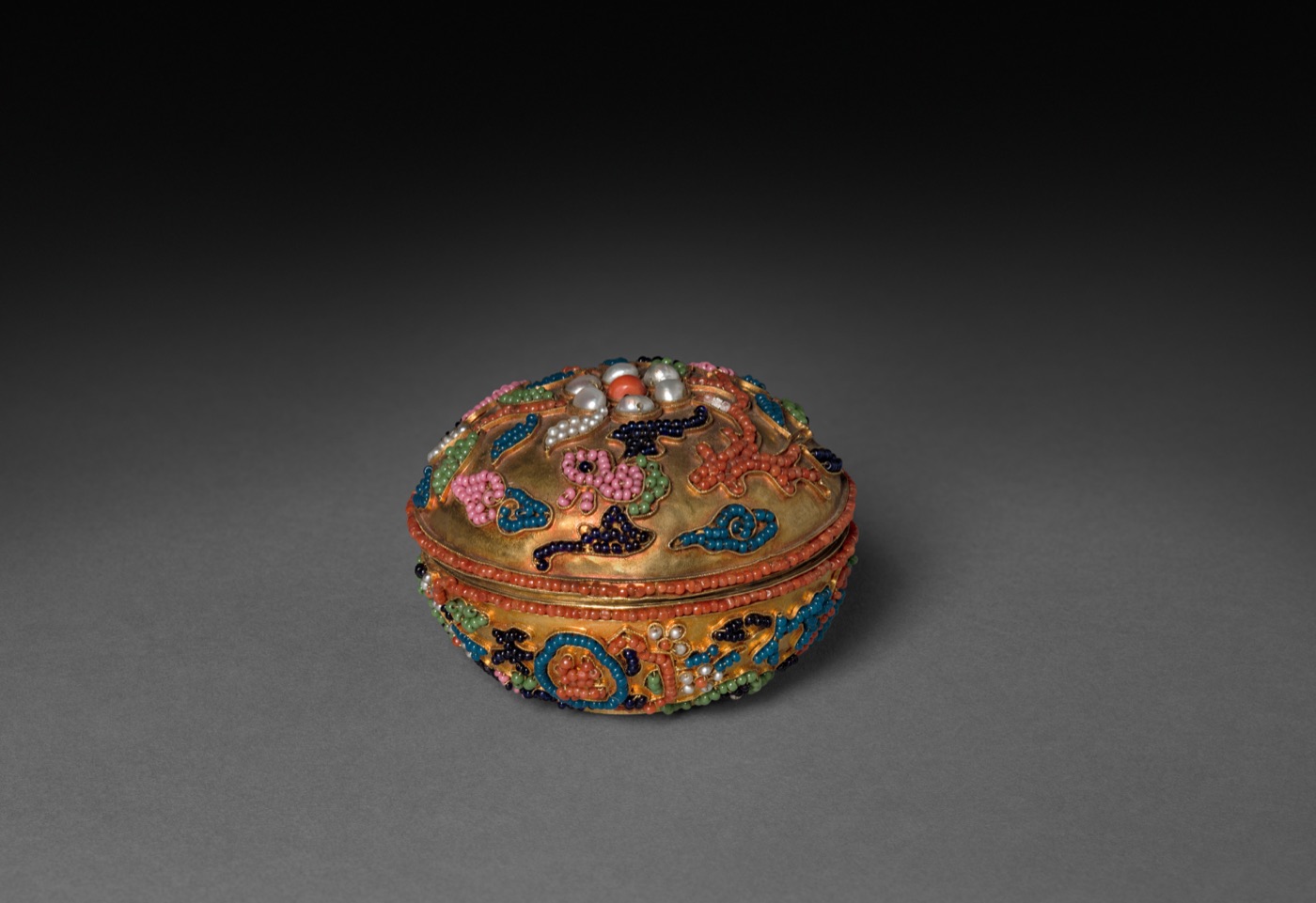
Historical object: Box, China, 19th century, metal. The museum record does not establish an original gift occasion.
Cleveland Museum of Art, Gift of Mr. and Mrs. J. H. Wade, 1916.640. CC0. Full image resized; no crop.Sources and scope
The conversations above are original editorial suggestions. The museum records support the historical examples and image identifications.
- The Metropolitan Museum of Art: Presentation Box, first half of the 17th century
Historical object date, material, use and lid imagery; not evidence for modern etiquette.
- Cleveland Museum of Art: Box, 19th Century, 1916.640
Object identification and public-domain image rights; original gifting occasion not established.
Gift colors and numbers: what the evidence can tell you
A color or number can carry a familiar association without deciding what a particular person wants to receive. Start with the occasion and the recipient, then use cultural background to ask a better question. These examples concern selected Chinese and Singapore Chinese contexts; they do not describe everyone who celebrates Lunar New Year or everyone with Chinese ancestry. Family and recipient preferences override these editorial suggestions.
The conversations below are original editorial English examples, not quotations, translations, or fixed formulas. They are invitations to communicate, not tests of cultural knowledge.
Red is a documented association, not a required purchase
The Smithsonian National Museum of Asian Art’s “Chinese Red” discusses red in Chinese art and celebration, including wedding clothing and envelopes for money. Its subject is historical symbolism and objects, not a survey of present-day recipients. It explains why someone might choose red packaging; it cannot tell you that your friend wants a red scarf.
Separate the wrapper from the gift. A recipient may like a festive envelope and still want a blue notebook, an unpainted bowl, or something chosen from a wish list. Ask about the object they will actually use before selecting a color for the presentation. If you are buying for a couple, ask the couple or their nominated contact rather than treating an online association as an instruction from their family.
For a first invitation, a concrete choice makes the question easy to answer: “I have a red gift bag and a plain paper one. Would either suit your celebration?” If they say either is fine, accept that answer. There is no need to make them explain a belief, defend their taste, or speak for a whole community. If the recipient has already requested a particular color, follow the request rather than replacing it with a supposedly more appropriate option.
Ask about this gift
“Would you prefer the green notebook you mentioned, or another color? I can wrap it separately if you have a preference.”
If you need to adjust
“I picked the red one because I thought you might like it, but I can exchange it for the color you wanted.” Keep the exchange practical. Do not suggest the recipient has rejected their heritage by preferring another color.
Evidence: Chinese Red
Four and eight: locate the claim in a cash-gift context
The Sun Yat Sen Nanyang Memorial Hall’s Culturepaedia article describes avoiding four and favoring eight in red-packet amounts, explaining these through sound associations with death and prosperity. This is museum-authored interpretation adapted from its River Hongbao 2020 exhibition, with a Singapore Chinese focus. It does not measure how consistently any individual follows those preferences.
Do not transfer a statement about the amount inside an envelope into a rule about every object sold in a pack of four. The evidence here does not establish that four books, a four-person game, or a product model number will offend your recipient. If a set is useful and has already been requested, there is no reason in this evidence to replace the request with an unwanted purchase.
For a cash gift, first find out whether a cash gift is welcome at all. Then choose an amount you can comfortably give, and ask a trusted organizer privately if the family has a preference about the figure. Avoid asking for other guests’ contributions or using the question to compare generosity. A number associated with prosperity is a symbolic wish; selecting it does not produce financial results or create an obligation to spend more.
Ask about this gift
“We would like to give a small cash gift. Does your family have a preference about the amount’s digits? We will keep it within our budget.”
If you need to adjust
“I did not know you had a preference about that figure. Would you like me to change the notes before I give the envelope?” If the gift has already been received, offer a quiet correction once and follow their response rather than announcing a mistake to the room.
Evidence: Red packets (Hongbao)
Even amounts do not make every odd number forbidden
SG101’s Singapore account describes even-numbered cash gifts through the idea of good things coming in pairs. Culturepaedia also describes even amounts but expressly allows nine through its longevity association. Read together, these accounts support a context-specific convention with exceptions, rather than a universal mathematical rule for gifts.
An envelope amount, the number of separate envelopes, and the number of objects in a box are different decisions. Ask which decision the host means if someone mentions “pairs.” Do not silently double your spending, purchase an unnecessary second appliance, or split a requested item into several gifts merely to satisfy a rule you have inferred.
A useful question gives the organizer room to say that the convention is unimportant in their household. It can also reveal a practical preference: a shared gift, a contribution to a named activity, or no gift at all. If the family offers a clear answer, stop checking it against a list. The purpose of asking is to make the exchange comfortable, not to find a more authoritative stranger who will overrule the recipient.
Ask about this gift
“When you mention pairs, do you mean the cash amount, or would you actually like two items? We were planning one gift from both of us.”
If you need to adjust
“I misunderstood and bought two. Would one be more useful? I can return the extra.” Make the adjustment without presenting a number as a guarantee of health, longevity, or future success.
Evidence: The Gifting of Red Packets in Singapore · Red packets (Hongbao)
White and black: ask before turning a warning into a ban
The sources linked in this module do not establish a general prohibition on white or black gifts or wrapping. The Smithsonian discussion of red cannot supply that missing evidence. We therefore do not turn common online warnings about these colors into a universal rule for presents, clothing, flowers, or packaging.
If someone has warned you about a color, ask what part of this particular event the warning concerns. A dress code, a family request about wrapping, and a recipient’s favorite color are separate matters. The host may have an explicit instruction that you can simply follow. A friend may also have repeated advice from a different event. Neither situation requires you to decide what an entire culture believes.
Before ordering a custom item, send a short description or picture to the recipient if that will not spoil something they want kept as a surprise. If you need an intermediary, choose someone the recipient trusts. Avoid making the recipient responsible for reassuring you repeatedly. When there is no answer, choose a modest, exchangeable gift suited to what you actually know about the person, and leave space for them to change it.
Ask about this gift
“The item you asked for comes in black or cream. Which would you like? Are there any wrapping colors you would prefer me to use for this occasion?”
If you need to adjust
“I can change the bag, or leave it unwrapped if that suits you better.” A simple offer is enough. Do not tell the recipient that the original packaging brought harm, or turn a preference into an alarming prediction.
Evidence: Chinese Red
Try a preference question before shopping
Imagine that you have a limited budget, a requested blue cup, and advice from an acquaintance to buy two red cups instead. Draft one sentence to confirm the recipient’s wish and another to explain your budget if needed. A workable response is: “Would you still like the blue cup on your list? I can bring one and add a card.” If the recipient changes their mind, confirm the new request before paying. This is an editorial practice situation, not evidence that any family expects this conversation.
Sources and their limits
- Chinese Red
Smithsonian National Museum of Asian Art. Museum interpretation of Chinese red symbolism and art; not personal etiquette research.
- Red packets (Hongbao)
Sun Yat Sen Nanyang Memorial Hall, published by Singapore Chinese Cultural Centre. Curator-contributed exhibition account; selected Singapore Chinese red-packet customs, not universal compliance.
- The Gifting of Red Packets in Singapore
SG101, Government of Singapore. Official Singapore heritage account; social description rather than a mandatory giving schedule.