
Chopsticks and shared dishes: a practical guide to the table
Observe the table, ask how shared dishes are served, and use chopsticks with care. Practical English wording for a meal, with located sources and room for different household habits.
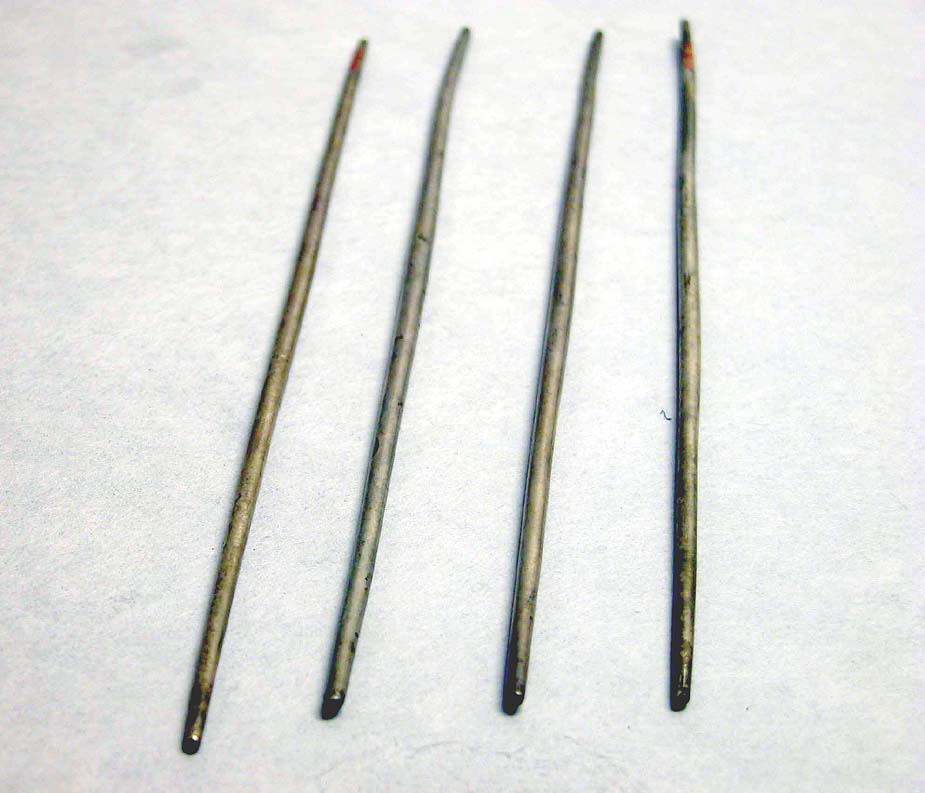
Four metal chopsticks, China, Tang dynasty (618–907); historical objects, not a modern place setting. The Metropolitan Museum of Art, Rogers Fund, 1922 (record 61134). Museum photograph, CC0.
The Metropolitan Museum of Art, Rogers Fund, 1922; record 61134 · CC0 · Complete museum photograph retained without cropping or recolouring.
Chopsticks at the table: notice the setting, then follow your host
A pair of chopsticks does not tell you everything about a meal. Before reaching for food, look at who is serving, whether dishes belong to individuals or the whole table, and where utensils are meant to rest. Those small observations give you useful information without turning your hosts into representatives of an entire country.
The examples below come from identified Chinese, Japanese, and Korean visitor resources. They are starting points for those settings, not an etiquette code for everyone who uses chopsticks. The practical scenarios and suggested questions are our advice for handling uncertainty; they are not quotations or documented rituals. Your host can explain what works at this particular table.
Before the first bite
Read the table before choosing a rule
Begin with three questions you can often answer just by looking. Which utensils are beside your place? Which utensils remain with a shared dish? Has the host invited everyone to begin? A second pair of chopsticks may belong to the serving arrangement, while a spoon may be intended for your own food. If the arrangement is ambiguous, leave it in place long enough to ask rather than guessing from the color or material.
Observation works best when paired with a small, specific question. Ask which pair is for serving, or where to put your chopsticks during a pause. Avoid asking someone to explain all of their culture over dinner. They can answer a question about this meal much more easily. If other guests act differently from one another, that is a reason to check with the host, not evidence that one guest is behaving badly.
Treat instructions about the meal as local information. A household may have named pairs for family members, a restaurant may provide utensils for each course, and a host may serve guests directly. None of these possibilities establishes a national rule. Notice what is being asked of you now, and be willing to change your approach when the setting changes.
At home
Ask about the household arrangement
At a home meal, let the person welcoming you show you your place before you rearrange bowls or take utensils from another setting. If food is already on your plate, you can focus first on that plate. If several dishes are in the center, ask how the family would like them shared. A relaxed meal can still have a clear distinction between the pair you eat with and the utensils used to transfer food.
When helping set the table, offer a useful question: would the host like a serving spoon or another pair of chopsticks with this dish? Present that as help, not a correction. A family preference can reflect convenience, who is present, or how the dish is served. It need not have an ancient explanation. Equally, a host explaining a custom is sharing something meaningful; listen without assuming that every other family follows it.
If someone offers to place food on your plate, you can accept, decline politely, or explain a practical need before the food is transferred. Do not rely on chopstick gestures to communicate an allergy or another dietary requirement. Explain what you need directly and check the dish with the person who prepared it. An etiquette guide cannot determine ingredients or make a meal suitable for an individual.
In restaurants
Let the service clarify the utensils
Restaurant staff can help with questions that a menu does not answer. Ask whether a dish is shared, whether the extra pair is for serving, and whether another utensil is available. Do this before transferring food if possible. A request for a spoon or fork gives staff a concrete way to help; there is no need to make it a declaration about how difficult the whole cuisine is.
A Shanghai municipal English-language guide, credited to China Daily, describes communal serving chopsticks, 公筷 (gōng kuài), and notes that some restaurants distinguish serving and personal pairs with black and white chopsticks. That is a described restaurant arrangement, not a dependable color code everywhere. At your table, confirm which is which. Leave utensils assigned to a dish with that dish instead of bringing them to your mouth.
If the pair at your place falls on the floor or appears damaged, set it aside and ask staff for a replacement. If a serving utensil is missing, request one. These are practical service requests rather than opportunities to diagnose a restaurant’s culture. When a server changes a course or clears a dish, make room and allow them to guide what should stay on the table.
Formal meals
Pause for seating and the opening cue
A formal dinner makes timing and coordination more visible. The Shanghai guide specifically discusses following the host’s seating plan at a banquet. Wait to be directed instead of selecting what looks like the most convenient chair. Once seated, look for an invitation to begin and notice whether food is being portioned by staff or passed among diners. You do not need to infer someone’s status from an unfamiliar table plan.
Seoul Tourism Organization’s dining guidance asks guests to begin after the eldest person starts. Keep that example attached to its Korean context; do not impose it on a different group. At a mixed gathering, a discreet question to the organizer about when to start is more useful than ranking strangers by apparent age. Follow an explicit invitation from the people arranging the meal.
When conversation begins, putting your chopsticks down can make it easier to listen and avoid gesturing over other people’s food. If a formal meal includes an unfamiliar sequence, pause between courses and follow the host’s explanation. Do not turn uncertainty into a performance of exaggerated bows or elaborate gestures. A brief question, careful attention, and thanks are workable responses when you are learning.
Customs with a source
Keep Japanese and Korean examples distinct
Japan National Tourism Organization’s food etiquette guide advises against leaving chopsticks upright in rice, handing food directly from one person’s chopsticks to another’s, pointing with them, and using them to pull dishes around. It also advises moving a portion from a communal platter onto your own smaller plate before eating it. These are specific points from its Japanese visitor guidance, not proof of an identical convention throughout Asia.
Seoul Tourism Organization also advises against leaving utensils upright in rice, but explicitly recommends a spoon for eating rice and returning the spoon and chopsticks to their original positions after the meal. A shared warning therefore does not make the surrounding practices interchangeable. Avoid copying one country’s bowl handling or utensil sequence into another setting simply because both meals include chopsticks.
These pages describe recommended behavior. They cannot tell you how strictly an individual household observes every point, what every diner believes a gesture means, or whether an accidental mistake will cause offense. We do not attach supernatural consequences, claims about luck, or invented funeral explanations to every action. If a host explains a symbolic association, listen to that explanation in its own context.
Japan National Tourism Organization: Japanese Food Etiquette Guide
While eating
Rest, ask, and recover without making a scene
For a pause, look for a chopstick rest or the place your host has indicated. If neither is clear, ask where to lay the pair. Keep the tips away from other people’s place settings. Avoid balancing utensils in a way that makes them likely to roll into a dish or fall. These are practical suggestions for managing the table, not a claim that there is one approved angle for every pair.
Choose a reachable portion before reaching across a shared plate. If the dish is too far away, ask for it to be passed or for someone to serve you. When a piece is difficult to grip, ask for a suitable utensil rather than pursuing it through the dish. The aim is to let everyone eat comfortably, including you. Grip technique and familiarity with chopsticks are not measures of respect for the people at the table.
If you make a mistake, stop the action, acknowledge a correction briefly, and follow the explanation. A dropped piece of food or an uncertain utensil choice does not require a speech about being a bad guest. If you accidentally use a serving pair to eat, tell the host or staff so they can replace it. Do not conceal it or claim that etiquette alone makes shared food safe.
Look closely
Historical utensils are evidence of objects, not today’s rules
The first photograph shows four metal chopsticks in The Met’s collection. The linked object record identifies a chopstick as Chinese, dates it to the Tang dynasty (618–907), and cautiously describes the material as metal, possibly silver. The group photograph makes their slender forms visible; it does not show anyone eating, demonstrate a grip, or establish how a contemporary household should lay its table.
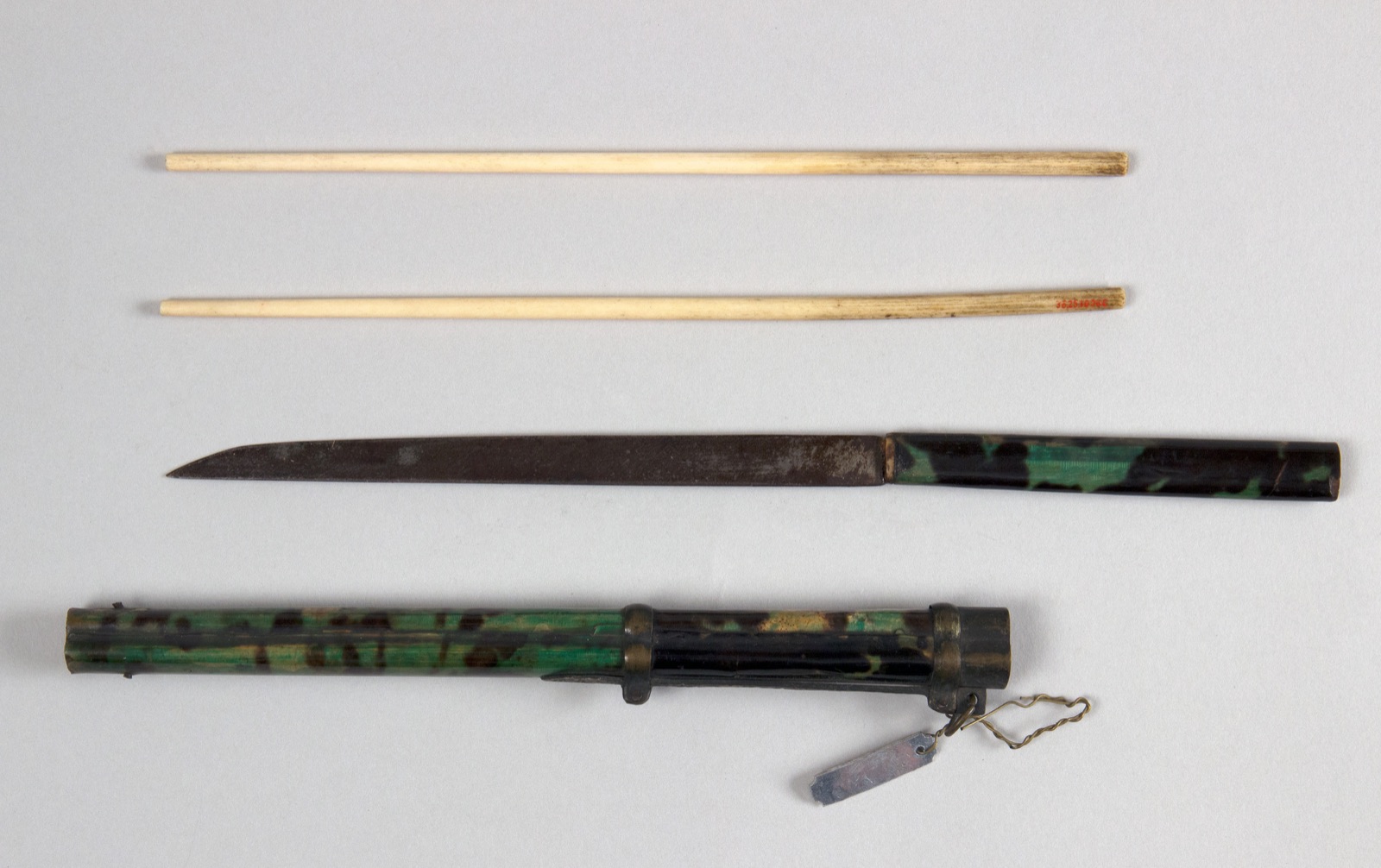
The second photograph shows two chopsticks alongside a knife and sheath from an eighteenth- to nineteenth-century Chinese trousse. The museum lists steel, wood, brass, and ivory for the set. Its different components are a reminder to look at the actual object record rather than imagine that chopsticks always existed alone. Neither photograph is a recommendation to buy these materials or copy a historical kit for dinner.
Use the photographs to compare shape and the relationship between utensils. Use your host’s instructions to understand a present-day meal. An object can be carefully documented while the social practice around it remains outside what its catalog record establishes. Keeping those kinds of evidence separate leaves room for regional, household, and individual differences without losing the value of the historical examples.
The Metropolitan Museum of Art: Chopstick, China, Tang dynasty (618–907), 22.79.8
The Metropolitan Museum of Art: Knife with Sheath and Chopsticks (Trousse), 36.25.1006a–d
Sources and photograph credits
- Japan National Tourism Organization: Japanese Food Etiquette Guide
- Shanghai International Services; article credited to chinadaily.com.cn: Guide to table etiquette in China
- Seoul Tourism Organization: Etiquette: dining guidance
- The Metropolitan Museum of Art: Chopstick, China, Tang dynasty (618–907), 22.79.8
- The Metropolitan Museum of Art: Knife with Sheath and Chopsticks (Trousse), 36.25.1006a–d
- The Metropolitan Museum of Art: Open Access at The Met
Both photographs come from The Met’s public domain Open Access images, released under CC0. The trousse photograph has been resized and JPEG compressed for delivery; both retain their complete composition. Their historical dates are given in the captions.