
Mid-Autumn Festival dates, 2026–2036
Calendar rule: The fifteenth day of regular lunar month 8. All dates below are Gregorian; lunar festivals use regular months, not repeated leap months.
The traditional date does not establish the time of moonrise, a local full moon, a public event or a family’s chosen reunion.
| Year | Gregorian date | Check the source |
|---|---|---|
| 2026 | HKO 2026 table | |
| 2027 | HKO 2027 table | |
| 2028 | HKO 2028 table | |
| 2029 | HKO 2029 table | |
| 2030 | HKO 2030 table | |
| 2031 | HKO 2031 table | |
| 2032 | HKO 2032 table | |
| 2033 | HKO 2033 table | |
| 2034 | HKO 2034 table | |
| 2035 | HKO 2035 table | |
| 2036 | HKO 2036 table |
Date evidence: 2027–2036 compared with Hong Kong Observatory tables on October 19, 2026; the 2026 table was content-checked on October 22, 2026 (UTC). This is a fixed reference window, not a live claim about today’s year.
Human review of this date section is pending. AI-assisted date explanations added separately from the guide’s existing review history.
Confirm official days off, venue access and the organizer’s date separately. Use the calendar for another year, or compare eight observances across the next ten years.
A festival with overlapping histories
Mid-Autumn brings together moon observances, seasonal celebration, and stories such as Chang’e’s ascent. A legend can be meaningful without providing the festival with one provable starting point. The British Museum identifies Chang’e particularly with Mid-Autumn while acknowledging variations in her story.
The calendar date identifies a festival night, not a promise about the weather or the precise astronomical instant of full moon. Watching a clouded sky together can still be part of the occasion.
Mooncakes are not all alike
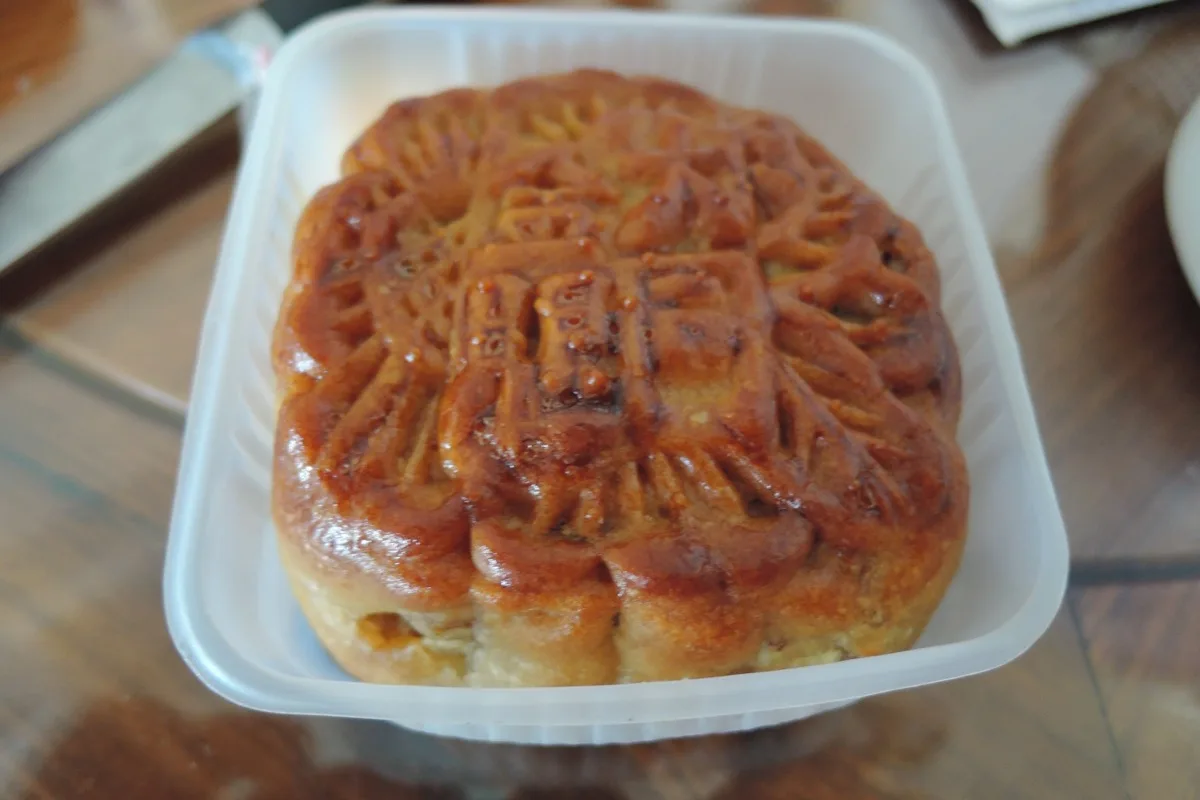
are often shared or given as gifts. Singapore’s National Museum holds a wooden mooncake mould from the mid-to-late twentieth century; its catalogue notes both round and rectangular pastries. That small object is a reminder that a familiar symbol can have more than one physical form.
Singapore’s National Heritage Board also documents newer fillings and snow-skin mooncakes alongside older varieties. Food traditions keep changing. When sharing, ask about dietary needs rather than assuming every pastry has the same ingredients.
How people make the evening their own
The Singapore heritage record describes lantern activities, family gatherings, and celebrations organized by clan associations and neighborhoods. Some households make offerings to the Moon Goddess; others gather mainly for food and company. Religious and social participation should not be assumed to be identical.
If you are invited, ask what the evening involves. Sharing food, listening to a story, or joining a public lantern event can be simple ways to take part. Let the people hosting explain what matters to them.
How to say Happy Mid-Autumn Festival in Chinese
中秋快乐 / 中秋快樂, Zhōngqiū kuàilè, means “Happy Mid-Autumn Festival.” Shanghai’s Chinese-learning vocabulary page supplies the simplified phrase and its Mandarin pronunciation. The greeting is useful when the person and occasion make a festive wish appropriate; it is not a literal translation of every English phrase containing “moon.”
中秋 is the festival name in this short greeting, while 快乐 / 快樂 means happy. Keep the whole phrase together when writing it. “Moon Festival” and “Mooncake Festival” are English names used for this occasion, but a wish about “a happy moon” is a different sentence. For a colleague or public gathering, an English greeting is also appropriate; choose words the recipient understands rather than treating Mandarin as a requirement.
A useful distinction
Mid-Autumn is distinct from the Lantern Festival on the fifteenth day of the first Chinese calendar month, even though lanterns can appear at both celebrations.
Choose a greeting for the person and the occasion
With family or a close friend, “Wishing you a lovely Mid-Autumn Festival. I hope we can share some time together soon” expresses warmth without assuming they can travel home. For a colleague who sends a gift, “Thank you for the thoughtful Mid-Autumn gift. Wishing you a pleasant festival” is appreciative without implying that a return gift is required.
At a public gathering, “Welcome to our Mid-Autumn gathering. We are glad you could join us” includes visitors who do not personally celebrate. Singapore’s National Heritage Board documents family, community and workplace participation, but does not require everyone to exchange gifts or use one greeting.
If a friend is grieving or missing someone, acknowledge what they have shared rather than insisting on a happy reunion. “I am thinking of you today” can be enough when a personal message is welcome. These are optional, original English examples prepared with AI assistance on October 25, 2026; human content and language review pending. Follow the recipient’s tone, not a universal etiquette rule.
Explore English examples by relationship and occasionFrequently asked questions
1 common questions
- How do I say Happy Moon Festival in Chinese?
- For Mid-Autumn Festival, 中秋快乐 / 中秋快樂 (Zhōngqiū kuàilè) is a short greeting meaning Happy Mid-Autumn Festival. “Moon Festival” is an English name for the occasion, not an instruction to translate moon word by word.
Sources & further reading
- Mid-Autumn Festival: living heritage in SingaporeNational Heritage Board, SingaporeAccessed Find an archived copy
- Mooncake mould, accession 2000-07825National Museum of SingaporeAccessed Find an archived copy
- Chang’e and the Mid-Autumn FestivalThe British Museum
- Spring Festival and the Lantern FestivalSmithsonian National Museum of Asian ArtAccessed Find an archived copy
- Mid-Autumn vocabulary: 中秋快乐 and Mandarin readingShanghai Municipal GovernmentAccessed Find an archived copy