
Versions and sources
A guide to what this page retells, what its evidence supports, and what changes elsewhere.
- The telling used here
- The main retelling follows the National Heritage Board’s Singapore account: Chang’e drinks the elixir to prevent Hou Yi’s tyranny from becoming eternal. We identify this protective motive rather than presenting it as every family’s version.
- Earlier evidence
- The Huainanzi’s Lanming chapter mentions Yi obtaining a drug of immortality and Heng’e taking it and going to the moon. This short textual witness does not supply the protective motive used in our main retelling. Heng’e and Chang’e are names encountered in this tradition.
- Important variations
- The British Museum notes that the legend has many variations. Compare who obtains the elixir, why Chang’e takes it, and whether the ascent is understood as escape, loss, or protection. An account that adds an intruder needs its own attribution.
- What the evidence cannot establish
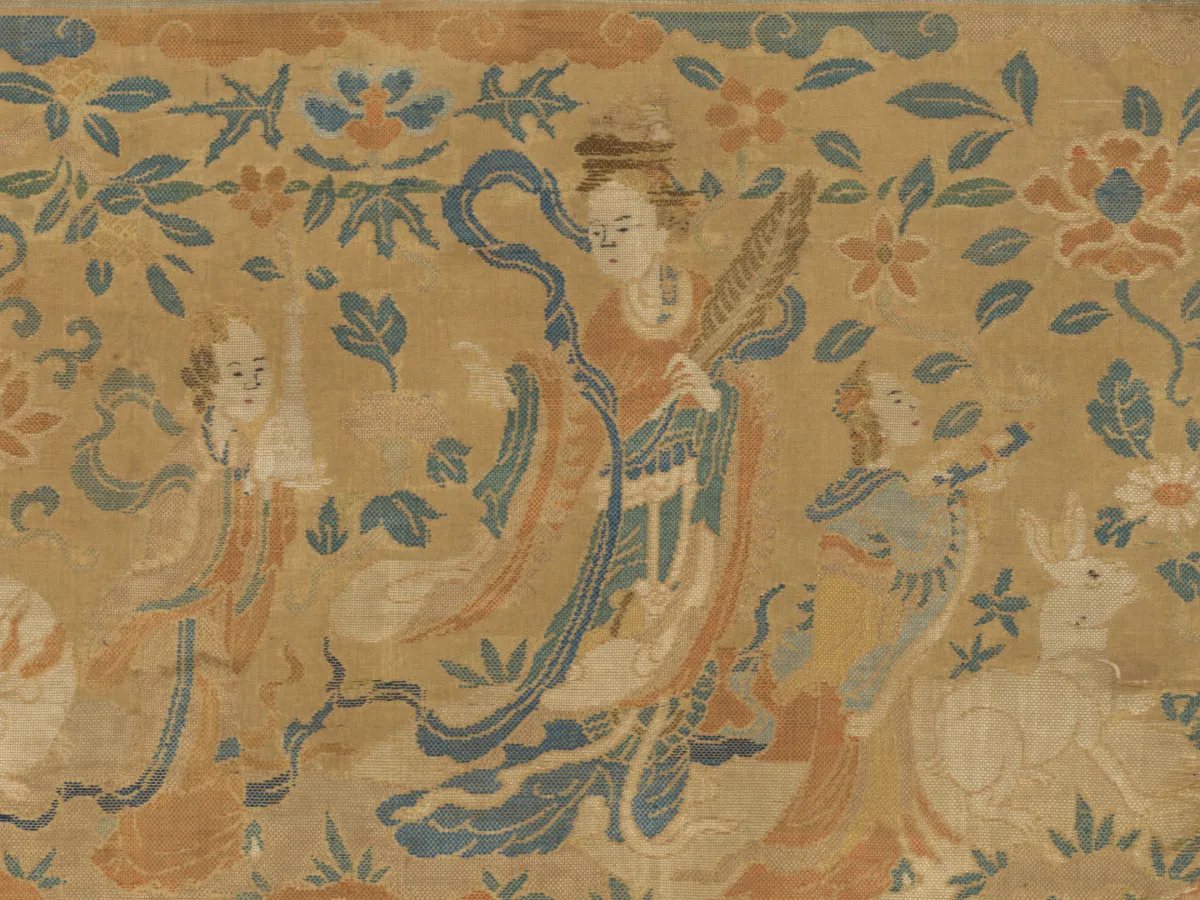
- A museum painting documents a representation of Chang’e; neither that object nor the myth establishes the historical beginning of Mid-Autumn customs.
Check the evidence for this comparison
- Mid-Autumn Festival: the Chang’e tradition in SingaporeNational Heritage Board, Singapore
- Chang’e: deity and variations of the legendThe British Museum
- Huainanzi, Lanming: Yi and Heng’eChinese Text Project · primary text
How to read these labels
These editorial cues separate kinds of context that are often blended together.
- Traditional interpretation
- Meaning carried through stories, beliefs or customary readings; it may vary and is not a prediction.
- Historical context
- Documented background, dated evidence or change over time.
- Modern practice
- How people use or understand something today; practices vary by place and community.
Traditional interpretation
One version of the journey
In the version described by Singapore’s National Heritage Board, Chang’e is married to the archer Hou Yi, who has become a cruel ruler. Immortality would allow his tyranny to continue without end. She drinks the elixir to prevent that future and ascends to the heavens.
This retelling makes her decision an act of protection, although it separates her from earthly life. It is one version, not the definitive plot of the legend.
Historical context
Why the differences matter
The British Museum’s account gives a short outline: an elixir, an ascent, and a connection to Hou Yi. It notes that the legend has many variations. A short summary should not make one storyteller’s explanation sound universal.
As you encounter another telling, notice who has agency, what motivates the decision, and whether the ending is presented as a loss or a release. These are questions for reading the story, not a claim that every version answers them alike.
Modern practice
A moon shared by people apart
Chang’e is associated with the Mid-Autumn Festival and is worshipped as a moon goddess in some communities. A family can also know the tale through storytelling without observing a religious ritual. The festival supplies the setting in which many readers first encounter her.
Her distance from earth offers one way to think about separation at a celebration often centered on reunion. That is an invitation to interpret the narrative, not a historical explanation for the whole festival. Moon observances, family customs, and stories have histories that overlap without being identical.
A useful distinction
There is no single Chang’e story that every Chinese family tells. The legend should not be presented as a documented account of how the Mid-Autumn Festival began.
Sources & further reading
- Chang’e: deity and variations of the legendThe British Museum
- Mid-Autumn Festival: the Chang’e tradition in SingaporeNational Heritage Board, SingaporeAccessed Find an archived copy