
Hetian, Hotan and Nephrite
和田玉 Hétián yù
A place name, a material name and a market term overlap—but answer different questions.
Sources checked 28 October 2026 · Specialist review of the original four guides reported by the site owner; newer notes are identified below
Historical evidence
Hetian and Hotan as place names
GIA identifies Hetian, also called Hotan, as a region in Xinjiang in northwestern China associated with nephrite deposits. A geographic history does not certify an individual bead.
Scientific fact
Nephrite as material
Nephrite is one of the materials commonly called jade. Material identification is a different question from the geographic origin of the raw stone.
Modern commercial terminology
A name used beyond its place
GIA reported that some green nephrite from British Columbia was sold locally as Hetian jade. Ask what a seller means by the term and what evidence supports any separate origin claim.
Historical evidence
Historic objects and their labels
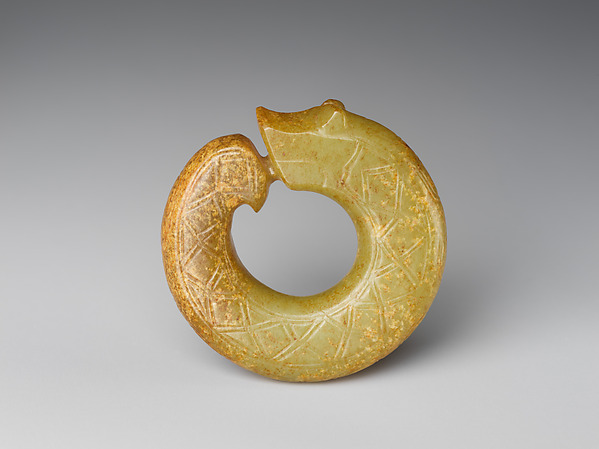
The Met catalogues its coiling dragon pendant as nephrite from China. The record does not establish that stones sold under the Hetian name came from the same deposit.
Source: The Metropolitan Museum of Art ↗
What this reference cannot tell you
Usage varies across markets and standards. This guide does not interpret an unexamined standard or establish geographic origin.
Common questions
New comparison notes: source-checked; independent specialist review pending.
Does Hetian jade always come from Hotan?
No. Hetian and Hotan are names for a place associated with nephrite, but the term Hetian jade is also used in trade beyond that place. GIA documents British Columbia nephrite sold locally under that name; a label alone does not prove origin.
What does Hetian jade mean?
The phrase combines a geographic name with a jade trade term. In cultural discussion it may evoke a historical connection to nephrite; in a product listing, ask what material and origin are actually documented rather than treating the name as a certificate.
Source: Gemological Institute of America ↗ · Gemological Institute of America ↗
Objects in context
Use the collection records to inspect dates, material and the limits of each attribution.
玉 yù
Pendant in the shape of a coiling dragon
A small coiling dragon carved in nephrite, catalogued by The Met.
- Date
- 13th–12th century BCE
- Material
- Jade (nephrite)
- Collection
- The Metropolitan Museum of Art · 2019.193.1
- Place
- China
The attribution describes this object; it does not identify another object or establish a single meaning for all dragon pendants.
View the museum recordSources & further reading
- The Nephrite Jade Road — Gemological Institute of America
- Jade description — Gemological Institute of America
- Pendant in the shape of a coiling dragon, 2019.193.1 — The Metropolitan Museum of Art
Manage the same analytics choice used across OrientLore.