
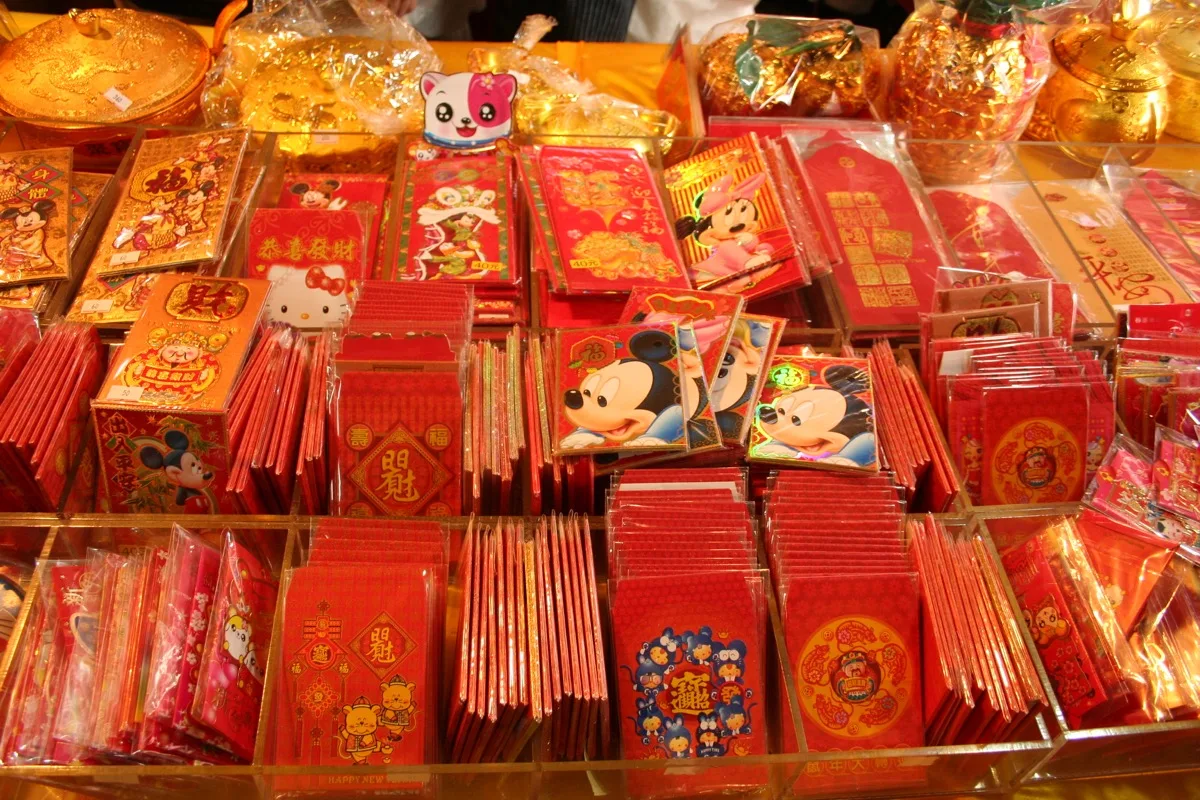
Why the red wrapping matters
Red has auspicious associations in this custom, so the wrapping helps make the money a celebratory gesture. Singapore’s SG101 heritage account connects the gift with appreciation and close relationships. Wishes for happiness or prosperity are symbolic expressions, not a guarantee about the year ahead.
Stories about protective money belong to the custom’s folklore. They should not be mistaken for a securely dated account of the first .
Gifts can travel in both directions
Children receiving packets from older relatives is a familiar New Year scene. The Singapore account also describes employed or married adult children giving packets to parents and grandparents in gratitude. The exchange is not limited to adults handing money to children.
A Smithsonian essay recalls a different family setting in Taipei, with gifts from parents, grandparents, relatives, and family friends. These examples help explain a custom without turning one household’s arrangements into a rule for every community.
Etiquette starts with the people present
In the Singapore practice described by SG101, giving and receiving with both hands and waiting to open a packet are polite habits. Expectations about amounts and recipients depend on the family and setting. Ask someone close to your host if you are unsure, and give within your means.
A brief, sincere greeting gives the exchange its human warmth. There is no need to turn the occasion into a comparison of amounts or an elaborate performance. If you receive a gift, thank the giver and follow the pace of the gathering.
A useful distinction
There is no single amount or age rule that applies to every red-envelope exchange. A gift’s amount is not a universal measure of the giver’s care.
Sources & further reading
- The Gifting of Red Packets in SingaporeSG101, Government of Singapore
- Lunar New Year: Then and Now, by Wendy WangSmithsonian National Museum of Asian ArtAccessed Find an archived copy